Meet the Monster: The Melonheads

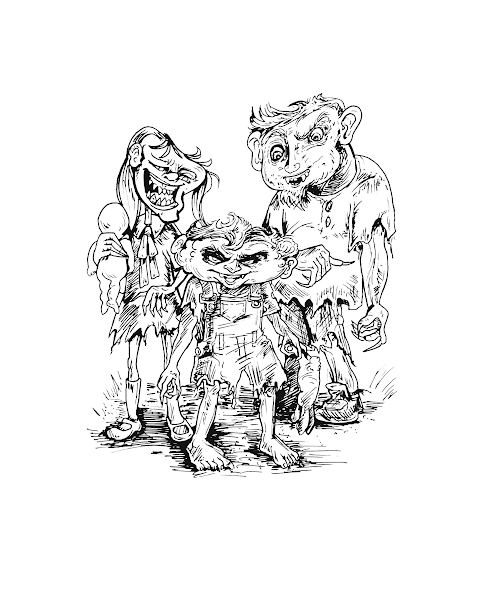
Lake County—There are multiple versions of the story of The Melonheads , but they all seem to involve a character named Dr. Crow in Kirtland, a small town of about 7,000 people in Lake County. Crow is either a malevolent or benevolent figure. In the stories where he’s a good guy, he takes in children suffering from some sort of dramatic macrocephaly—or, um, big-headedness—and cares for them, until a tragic accident sets his house aflame, and he dies in the fire, leaving the children alone. 

In the more popular stories where he’s a bad guy, he acquires children to experiment on—sometimes from the government, sometimes on his own—and he injects their heads with water and performs other cruel experiments that lead to their melon-headed appearances. Again, there’s a fire and he’s killed—sometimes an accident, sometimes the children cause it, but, at any rate, when he’s dead  they escape into the woods.

And they are said to still roam the woods, a nomadic tribe of feral, hunter-gatherers looking for potential victims. Or, in some stories, the Melonheads in the woods are the ghosts of the original children who died in the fire as well. Being an urban legend, there are plenty of variations on almost every aspect of the story.

Though actual, reliable sightings of the Melonheads are rare, driving around the lonely roads said to be their haunts and looking for them has long been a popular pastime for teenagers and young people in Lake County.

Illustration by Janie Walland

Meet the Monsters: The Grassman

Akron, 1995—The name “Grassman”  has gradually started to become a term that refers to Bigfoot in Ohio  in general, being used in such a way in a 2008 episode of The History Channel’s MonsterQuest and a trio of episodes of The Destination America reality show Mountain Monsters, as well as an episode of the latter channel’s Monsters and Mysteries in America.

The name seems to have first appeared in print in writer Christopher L. Murphy’s 1997 book Bigfoot in Ohio: Encounters with the Grassman, and came from a 1995 investigation of Akron-area sightings by Murphy’s co-authors, Joedy Cook and George Clappison of the Ohio Bigfoot Research and Study Group. During their field research investigating sightings by a pair of local men, they found what they thought might be some sort of Bigfoot “nest,” an igloo-shaped structure made of large sticks woven together with smaller sticks and covered in grass, branches and leaves, big enough for three men to sit in.

The nest might be the origin of the name Grassman…or might not be. Other theories included Murphy telling MonsterQuest that European settlers in the area first saw Bigfoot-like creatures in the tall grass, and an Akron woman saying her grandfather used the name as a sort of boogeyman to scare children  away from playing in the tall grass by his house.

Joedy Cook seems to have carried the name with him, though, as he—and the nest—appeared in the episode of MonsterQuest and Cook was further interviewed in the previously mentioned episode of Monsters and Mysteries in America.

Cooke also  released his own 2010 book on Bigfoot in Ohio,Traces of the Grassman: The Search for the Ohio Bigfoot

Similar nests have been found in other states, so it might be a more common form of Bigfoot behavior than just an Ohio thing, but, whatever its exact origins, the name “Grassman” has taken hold as a local name for Bigfoot.

Illustration by Janie Walland

Meet the Monsters: Big Head

Butler, 1978—This local variation of Bigfoot exists in only a handful of sightings from in and around Richland County, several of them generated by the children from a single household. Those sightings were quite thoroughly documented in police reports, however, giving them a lot more weight than they might otherwise have. 

The first of these reported sightings was made on July 8, 1978, in Butler, a village of about 1,000 people situated a half-hour or so southeast from Mansfield. At around 11 PM, the children heard some strange noises coming from a wooded area near their home on Elm Street, at which point they investigated and found the creature. They described it as being somewhere between seven and eight feet tall, with large red eyes and, most remarkably of all, a head that was about three-feet in diameter.

A few days later their sister was outside unloading hay with their parents. A train was coming down the tracks not too far behind their house, as one did a few times a day, but in this particular instance the train was whistling with uncommon frequency and for longer than usual durations. The girl eventually  turned her flashlight in the direction of the train, and that’s when she saw the monster….or, really, just its eyes. These she said were the size of golf balls, and glowed the same orange-ish red of the lit tip of a cigarette.

She retreated to her bedroom with her mother, from where they could both hear “crying” noises—which they described like those of a cat, but deeper. The noises were accompanied by a very strong and very foul odor. The police came and took another report, but they apparently had just  missed the monster again.

Illustration by Janie Walland

Meet the Monsters: The Minerva Monster

Minerva, 1978—The Minerva Monster takes its name from the village of Minerva, about 20 miles or so east of Canton. In August of 1978,  Evelyn and Herbert Cayton’s grandchildren ran up to the house saying they had seen  a monster in the gravel pit nearby. The Caytons and their daughter went to investigate, and found the kids were telling the truth; they too saw a monster in the gravel pit.

They described the creature they saw as seven-foot tall, weighing about 300-pounds and covered in thick, dark, matted hair, hair that was so  thick and shaggy that it completely obscured the humanoid creature’s facial features. 

The most dramatic of several other sightings came on the night of August 21st. The Caytons were entertaining friends and family when they heard strange noises coming from the direction of an old chicken coop in their backyard. They could see something moving in the dark, and there  were two pairs of yellow eyes there, reflecting the light from the porch.

In order to get a better look, eighteen-year-old Scott Patterson got into a car and turned the headlights on, which revealed the owners of the eyes to be two large, “cougar-type” felines of some sort. At that point, a large, bipedal creature like the one from the gravel pit stepped in front of the cats, as if to protect them. 

The sheriff was called, and the area investigated, but no monster or its pet cats were ever found by law enforcement, although the Caytons and others in the area continued to see the monster, sometimes accompanied by a pair of what were variously described as cougars, mutant cat-like creatures or smaller versions of itself going about on all fours.

Illustration by Janie Walland

Meet the Monsters: Bighoot

Highland County, 1982-1983—Provided that all the people who said they saw Mothman in the Ohio River Valley in 1966-1967 had really seen some sort of flesh and blood creature, could it be that what they were seeing was some sort of undiscovered species of giant, monstrous owl?

That was a theory put forward by the late cryptozoologist and writer Mark Hall, who in his 2004 book Thunderbirds!: America’s Living Legends of Giant Birds (Cosimo Classics; 2004) noted the prevalence of stories of giant birds and owl-like creatures in the Ohio River Valley, of which Mothman might have only been a more recent example.

There was also a Birdman, said to be a giant red bird with the head of a man that, like Mothman, also made a habit of chasing cars. And there were Native American legends about wicked supernatural creatures called “Flying Heads” which were just what they sounded like—giant, flying heads with claws attached. 

Hall thought a large owl could account for these various descriptions as well as the stranger reports of Mothman’s figure; which claimed it had no head, but eyes embedded in its chest. Given an owl’s small round head that seems to sit right atop its round-ish body, as if it had no neck, couldn’t an owl look a little like a large flying human head, or a perhaps a headless winged figure? Especially in the dark, and while in motion?

Owls also, incidentally, give off red eye-shine when light hits the membranes in the back of their eyes in the dark, and Mothman’s most striking feature was, of course, shining red eyes.

Now, how big an owl are we talking about here? After all, Mothman was said to be man-sized and have a ten-foot-wingspan.

Well, we could be talking about a very large owl indeed.

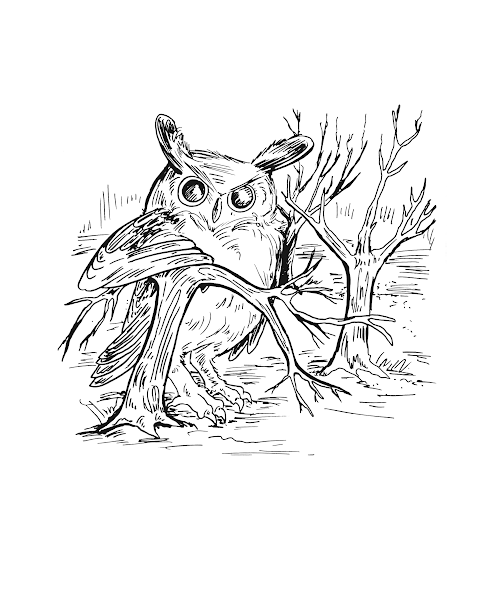
Hall recorded a pair of sightings by a single woman a year apart, in 1982 and 1983, at Rocky Fork Lake park in Highland County in southwest Ohio. In the first sighting, she said she saw what she thought was a  tree start to move…until she realized, once it flexed its small airplane-sized wings, that it was actually a giant owl camouflaged as a dead tree. On the second instance, she noticed that it had huge, yellow legs with three toes on each foot.

Hall called this giant owl “Bighoot,” which didn’t prove too terribly popular among his fellow cryptozoologists, being a bit too cute a name. 

Illustration by Janie Walland

Meet the Monsters: Mothman

Ohio River Valley, 1966-1967: You have undoubtedly heard of The Mothman, one of the most famous cryptids in the world. You’ve also probably heard that the mysterious creature hails from Point Pleasant, West Virginia, where it was seen over 100 times in a 13-month period between 1966-1967, before the Silver Bridge collapsed into the Ohio River, killing 46 people. After that tragedy, Mothman sightings stopped as suddenly as they began. 

So what’s Mothman doing on a blog—and in a book—on Ohio monsters? Well, the Silver Bridge connected West Virginia to Ohio, and monsters, like all animals, aren’t confined by state borders: The Mothman was reportedly seen at least three times in the state of Ohio during its year long reign of terror and high strangeness in the Ohio River Valley.

In the first instance, a gray, man-sized bird-like creature with a 10-foot wingspan chased the car of a 17-year-old boy on the highway along the river.

In the second, four women driving at night found their car “buzzed” by a huge bird with a brown and silvery body and large red eyes.

And  in the third and final instance, a pair of women driving late at night saw a large, white creature with curving, 10-foot wings and long hair in the road in front of them that  then soared straight up into the sky.

No one really knows what exactly people in the Ohio River Valley were seeing that year, but theories abound: Was it a demon? An extraterrestrial? An ultra-terrestrial? A mutant bird? A man-made construction? The result of a curse?

One of theory was that many Mothman sightings were the result of people mistaking owls for bigger, scarier creatures. And, another, related theory is that, if we can be permitted to replace one species of monster with another, that the creatures people were seeing were actually some sort of giant, undiscovered monstrous owl. But more on that next week…

Illustration by Janie Walland

Meet the Monsters: The Defiance Wolfman

Defiance, 1972—The town of Defiance is about 50 miles southwest of Toledo, and, in August of 1972, it was apparently home to a wolfman…or, at least, someone dressing up like a wolfman. That was when the local paper the Crescent-News first revealed that the local police department was on the lookout for a wolfman, after first wanting to keep it quiet, not wanting to incite a panic. 

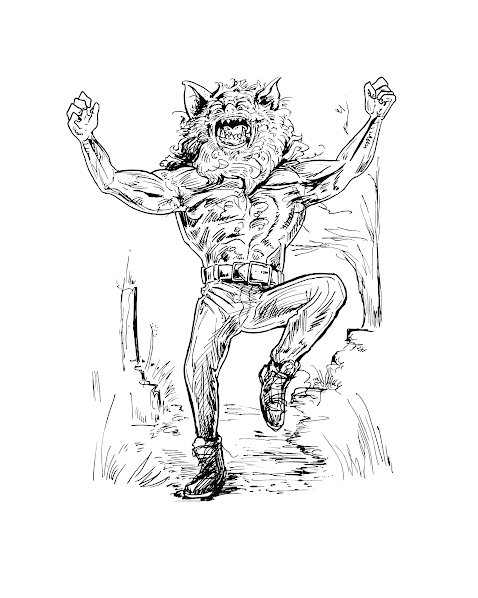
According to the Crescent-News story, on three different occasions witnesses saw a figure that they described as some kind of wolfman near the railroad tracks in downtown Defiance, between the hours of 1:30 and 4:20 AM. On one occasion, it struck a man from behind on the shoulder with a two-by-four or some kind of club it was carrying.

All said it was very hairy and that it seemed to be a person wearing “some disguise such as a mask”. It apparently wore dark clothing—one witness said blue jeans—and was described as ranging from six to nine feet tall. Which is actually awfully tall for someone just wearing a mask.

The first witness, railroad man Ted Davis, said he had seen the monster in the early morning hours of July 25. He was in the act of connecting an air hose between two train cars and thus had his head down. “I saw these huge hairy feet,” he told the reporter. “Then I looked up and he was standing there with that big stick over his shoulder. When I started to say something, he took off for the woods.”

The article, and another in the Toledo Blade, helped set off a bit of mass hysteria, just as the police had originally feared, and they received  all kinds of calls from frightened citizens worried about the wolfman. 

If it was just someone in a disguise, police never caught who it was, and, like so many other monsters in Ohio, it simply stopped appearing in newspaper stories.

Illustration by Janie Walland

Review: “Chasing American Monsters”

There are plenty of books devoted to chronicling the monsters of a particular state, like, for example, my own book, Monsters of Ohio, or the books that inspired me to write it , Joseph A. Citro’s The Vermont Monster Guide (University Press of New England; 2009) and Rosemary Ellen Guiley’s Monsters of West Virginia (2012; Stackpole Books). Author Jason Offutt’s Chasing American Monsters: Over 250 Creatures, Crytpids and Hairy Beasts (Llewellyn Publications; 2019) is a little like 50 such books in one.

Each of the book’s 50 chapters is devoted to the monsters of a particular state, and, after a little bit of state trivia and a lavish illustration of one of the states’ monsters by artist Ty Derk, Offut writes of about a half dozen or so of each state’s most famous monstrous inhabitants. 

Because he’s covering so much ground in a relatively brief 330+ pages, the entries on each monster are generally quite short and often cursory, a few paragraphs each, but the book makes an excellent starting point for anyone curious about any particular state’s monster population. 

These include traditional crytpids, supernatural creatures, aliens, creatures from folklore and lumberjack tales, and monsters of Native American legends, plus lots of lake monsters and lots and lots of Bigfoot-like creatures—in fact, just about every state  seems to have a hairy humanoid of some sort that makes its home there.

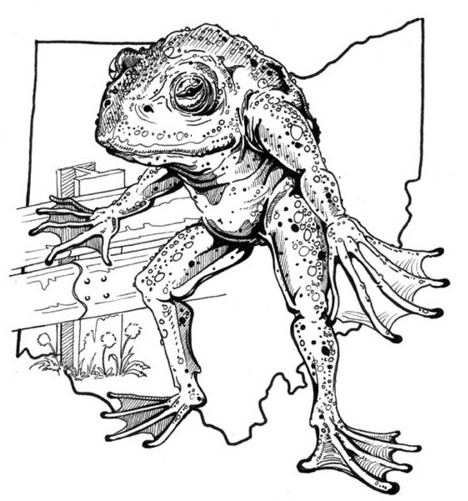
Of greatest interest you and I, of course, is the section on Ohio, which features Derk’s interpretation of one of the Loveland Frogs (above), posed dramatically before a guard rail (By the way, you can see all of Derk’s illustrations here; if you don’t pick up a copy of this book, I would at least recommend you scan through Derk’s gallery of drawings, just to see his interesting takes on various crytpids). 

Offut includes six monsters from the Buckeye State: Ohio Grassman, Mill Lake Monster, Orange Eyes, the aforementioned Loveland Frogs, Bessie and Mothman. Of them, I featured each in a chapter of Monsters of Ohio, except for the Mill Lake Monster, which I discussed only briefly in my chapter on Orange Eyes.

In his entry on the Grassman, Offut continues the trend of using the term to refer to Bigfoot in Ohio in general. He mentions the 1869 “A Gorilla in Ohio” story from the Minnesota Weekly Record  (almost certainly a newspaper hoax) and devotes the rest of the entry to discussion of The Minerva Monster, the hairy humanoid seen in Minerva by the Cayton family, which he misspells as “Clayton” throughout, and others in 1978. He also notes that Bigfoot investigators found “grassy nests where they said the creature bedded down, giving the legendary creature the name Grassman.”

As for the Mill Lake Monster, that was a particularly weird monster supposedly seen by three teenagers rising out of the water at Charles Mill Lake in Richland and Ashland Counties. The creature was described as seven-feet-tall, arm-less and with glowing green eyes, and leaving tracks like those of swim fins.

And as for Orange Eyes, Offut’s source for Ohio’s monster of lovers’ lane seems to be W. Haden Blackman’s The Field Guide To North American Monsters (Three Rivers Press; 1998), as it similarly conflates several unrelated monster stories into the Orange Eyes legend. 

Despite my couple of quibbles with Ohio’s delegation though, I thought the book was an awful lot of fun, and would recommend it to anyone interested in the subject of monsters. 

Meet the Monsters: The Peninsula Python

Peninsula, 1944—Unlike many of the other monsters covered in my book, the Peninsula Python belonged to a real, recognized animal species, it was just in a place it should not have been: The Village of Peninsula, in the middle of the Cuyahoga Valley National Park in Summit County, in the summer of 1944.

How exactly it came to be there is unclear, but it was thought to have escaped when a truck carrying it as part of a circus or exhibit crashed.  

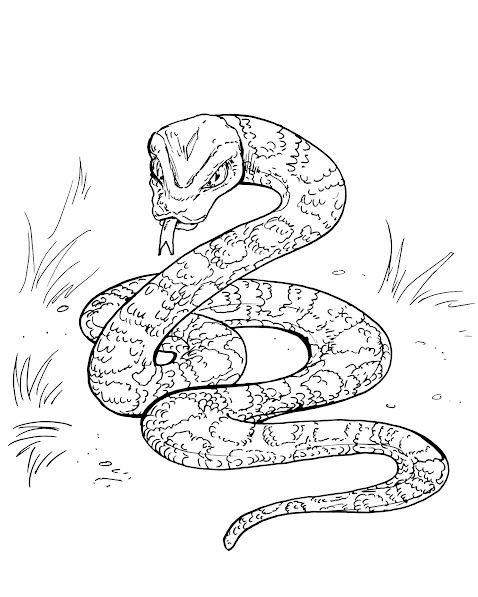
The 15-18-foot snake was seen slithering around local farms, leaving a trail like a heavy tire track that went in and out of the river, and generally scaring the heck out of anyone who saw it. The Python was never caught, killed or found dead—despite a few hunts by organized posses—it just stopped appearing. One assumes the tropical snake crawled into a hole somewhere and succumbed to the Ohio winter…if it was ever here at all, of course.

The tale  of the python was originally told by Cleveland Press reporter and notorious hoaxer Robert Bordner in a 1945 story in The Atlantic with the perhaps overly-defensive title of “The Peninsula Python: An Absolutely True Story”. which may leave some room to doubt its veracity. 

Illustration by Janie Walland

Review: “Monsters In Print: A Collection of Creatures Known Mostly From Newspapers”

There’s a pretty great idea for a book behind Monsters In Print: A Collection of Creatures Known Mostly from Newspapers (Independently published; 2019), and I’m glad someone compiled and published it. That someone was Adam Benedict of the Pine Barrens Institute.

Scouring historical newspaper archives, he’s gathered articles about monsters from the 1820s through the 1940s, and presents them here in chronological order, making no attempts to edit them, for the sake of veracity, nor any attempts to contextualize or explain them, for the sake of objectivity. The result is a book that can be difficult to read straight-through for pleasure, but also a valuable book, for anyone particularly interested in the subject matter…like, say, someone who was writing their own book on monsters. 

Benedict’s decision to use time as the organizing principle for his book, rather than geography or type of creature, means one can see how much some things change over the decades, and how little other things change. It does make it a little difficult to navigate, though, if someone is reading for monster stories based on a criteria other than the order in which they appeared (There is an index of “source newspapers by location,” although I’ve noticed both in reading this book and in my own research that the location of the home newspaper doesn’t always match up to the setting of the monster sighting, as we’ll discuss below and we examine the particular Ohio content of Monsters In Print).

The book collects about 160 articles about monsters in total, filling its first 400 or so pages of the book (after which point there is a “bonus” section on mystery airships, featuring ten articles from 1896-1915 about the occasional sightings or even flaps of sightings regarding flying machines of various sorts that are often considered forerunners to UFO sightings; here, only one of the articles seems to suggest an interplanetary source of the ships, though). 

Of those 160 articles, it will probably come as no surprise that the vast majority of them, almost 70, are of the sea serpent or sea monster variety, although when I say “seas monster” I’m here counting large fish, reptile or amalgamated mystery creatures seen not only in the ocean, but also in lakes and occasionally even in rivers.

Stories about wildmen of various types account for the next biggest category, with 23 articles, while eagles or giant birds accounted for eight articles and giant snakes for seven.

Following sea monsters, the next biggest category is what I would consider miscellaneous monsters, of which very few appear more than twice in the book. These 50 creatures include a pig-headed woman, a vampire, a mermaid, a couple of mer-men, a centaur, a banshee, man-eating plants, a giant turtle, a giant lizard, a giant spider, a giant frog, a frog man, mammoths and mastodons, several chimerical creatures like “a cross between a lion and a bull,” the Hodag and some monsters so strange that it would take too long to try to explain them in this space.

While many of these articles I read for the first time in this book, there are some classic stories that should be familiar to most readers interested in the subject of cryptozoology, and these are always fun to run across, as the realization dawns that one knows this monster, it’s a little like running into a friend or an acquaintance unexpectedly.  

These include The Van Meter Monster, a winged creature seen around the small Iowa town in 1903 that bore a light on its head, and is sometimes written of in the context of pterodactyls, or visitors akin to the Mothman or even as an American answer to Spring-Heeled Jack;  The Partridge Creek Monster, the relict “Keratosaurus” that was said to be seen in the not-terribly-dinosaur-friendly area of Alaska in 1908;  and several stories of the Jersey Devil from the 1909 flap that helped solidify that particular American monster’s place in legend and culture.

As for the Ohio content, there are six entries in the index, but, remember, that’s for the place of origin of the newspaper an article comes from, not the pace where the monster featured in the article hails from. 

The first tale is from an 1855 issue of the Carroll Free Press, “The Monster Snake Taken,” and it rather breathlessly chronicles the capture of a serpentine lake monster from an unnamed body of water that empties into the Genesee River. The creature was captured by one Daniel Smith, “an old whaleman,” with his harpoons, strong whaleline and his experience of hunting whales; the article claims the monster was taken alive, essentially leashed to the shore with a harpoon and wire, and was measured to be 59-feet, five-inches long. That’s pretty precise, given that it was still alive and thrashing when the measurements were taken!

Next comes an 1876 story from the Cincinnati Daily Star. Headlined “Vampirism in Servia,” the four-page article tells the story of a young girl killed by a vampire in Servia, where “as in the most Slavonic countries, exists a popular belief in vampires, dead folk who quit their graves at night to torment the living.”

The Cincinnati Daily Star also published the next article from an Ohio paper, 1879’s “Two Terrified Hunters: Chased by an Enraged Maniac on Whom They Fired.” Said maniac is a wildman, which cryptozoology enthusiasts will recognize as a precursor to the modern Bigfoot stories. In Vermont, a pair of hunters saw “a huge, hairy object…spring from behind the cliff and start for the woods, running with the speed of the wind.” Thinking it an animal, the hunteres fired and grazed its arm, at which point it turned and resumed running with the speed of the wind, right at them. 

As wildman/Bigfoot stories go, this one is interesting, as it seems to be a bit of both:

The hunter’s story revives a long-forgotten but now distinctly recalled yarn to the effect that many years ago a lunatic, then a young man, escaped from his keepers somewhere near the New York State line, and gained the mountain fastnesses, where he evaded pursuit, and, it is thought, subsisted on berries and the flesh of animals killed through some means best known to himself.

The hunters’ description doesn’t match a regular human being who ran into the wilderness, not unless a reader believes in some sort of rapid devolution or magical transformation, brought on by environment and diet (and, apparently, many did thing such transformations possible back then).

“The hunters say that they are positive that it was no optical illusion, but a genuine wild man,” the article says, “The creature’s arms, they say, were long and hairy, and looked very much like a full-grown gorilla.” (I should note here that several lines of this story seem taken directly from those an 1883 article from the Fort Wayne, Indiana Gazette, which I only know because Chad Arment included the Gazette article in his 2006 book, The Historical Bigfoot. That article sets the action in New Lisbon, Ohio, names the hunters as two Columbiana county men, Bob Bradley and Henry Raush, and describes the wild man simply as “covered with hair and looking like a bear.” This doesn’t instill great confidence in the veracity of either of these stories.)

The next story from an Ohio source, an 1889 issue of the Enterprise (perhaps from Wellington, Ohio?), was also of a wildman. This “monster animal” was over seven feet tall, walked erect like a man, was hairy all over, “and its mouth was in the chin and great claws on the fingers and toes.” This was in South Carolina. The creature was apparently stealing a hunting party’s kills from their campsite at night, and one night when they stayed up to see who was stealing from them, they saw the creature and shot at it, chasing it into the woods. The interesting bit here is that the animals cry was apparently “Yaho, yaho, yaho!” Some Bigfoot-like creatures go by the name Yahoo, based on their cry.

Finally, there are a pair of July 1890 articles from a paper called  Democratic Northwest. The first tells briefly of a giant snake travelling through the air on a cloud in India (no mention of wings, just that “he kept continually rolling over and darting out his head in a genuine snake fashion”), while the second of a whole school of bizarre sea monsters sighted by a sea captain twenty miles off Cape Hatteras near North Carolina.

These creatures were ten feet long, and each had four long arms, “on the end of which were claws that resembled the hands of an ape.” These arms they used to grab onto the ship and in defense, taking hooks and other implements from the sailors and trying to rescue their fellow monsters whenever one would be caught.

The lake monster and the wild men seem to fit pretty neatly into pre-existing categories of cryptids, and even the vampire fits into folklore, but these last two are certainly some doozies. You’ve probably read of a flying snakes of various sizes before, but I’m hard-pressed to think of any animal, living, extinct or even reported that could account for the four-armed fish, which we’re told were “covered with thick scales, resembling the scales of a drumfish, while the belly resembled the hid [sic] of a porpoise.”

So, out of all these monster reports that fill this book, are none actually set within the state of Ohio? There are two, both from 1887, one of which I included in my own book, Monsters of Ohio.

The first of these articles comes from Maryland’s The Midland Journal: “The Wild Man of Ohio: A Curious Creature Seen Among the Hills of Holmes County.” A party of four hunters were beating the brush for pheasants near the Wayne County line when they spooked an entirely different kind of animal: “[A] man, entirely nude but covered with what appeared to them to be matted hair.” He or it ran at them, “giving forth queer guttural sounds,” and they retreated. When they reached a public highway, the wild man turned back “and was seen to enter Killbuck Creek, which he swam, and then disappeared in the brush again.”

The article ends with “they are of the impression that he is no relative of the famous wild man of Rockaway.”

This particular article was also among those included in the Ohio chapter of the previously mentioned The Historical Bigfoot, although in that book the source is he Indiana, Pennsylvania Progress, and the year was 1886.

So here there seems to be what we might consider a 19th century Bigfoot sighting, even if it’s not the most spectacular story. Other than the fact that includes a wild man/Bigfoot at all, of course. 

The Omaha Daily Bee story is of another popular Ohio monster, the Lake Erie Monster, although this particular iteration of the monster is unlike the more typical, large, serpentine appearance.

With a dateline of “Toledo. O., May 13”, this is the story of the “two French fishermen named Dusseau.” Returning from fishing on the lake late at night, they noticed a phosphorescent monster between twenty and thirty feet long on the beach. “It was shaped like a sturgeon, but had arms which were thrown wildly into the air.” (Well, I suppose those weird fish off the coast of North Carolina weren’t the only fish with arms after all). As you likely know, both brothers rushed off to get ropes and help in order to catch “the submarine monster,” but when they returned it was gone, only “a half dozen scales as large as silver dollars” and tracks on the beach to show that it was ever there. 

Finally of possible interest to Ohioans, there’s an extremely strange story from a 1915 edition of Iowa’s Webster City Freeman set in Geneva, Ohio, which sets up a disagreement between two local men over what is causing cellars throughout the city to clog, some sort of tentacled sewer monster referred to as a “Zippotherantheus,” or simple tree roots. You can probably solve this mystery yourself, although the writer seems to have had great fun writing of the conflict.